

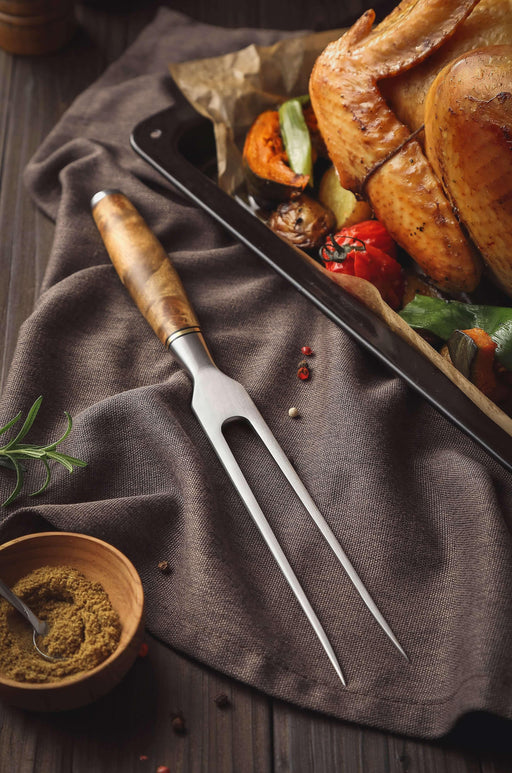
Carving meat can be an art form, transforming a whole piece into beautifully sliced portions ready for serving. A crucial tool in this process is the fork, often underestimated in its role. Mastering the use of a carving fork can significantly enhance your culinary presentation. From choosing the right fork to employing the correct techniques, several expert tips can elevate your meat carving skills.
Choosing the Right Carving Fork
Selecting the appropriate fork for meat carving is the first step towards achieving precise cuts. The following factors should be considered:
- Material: Stainless steel forks are preferred for their durability and resistance to rust.
- Design: A two-pronged meat fork provides the stability needed for larger cuts of meat.
- Handle: Ergonomic handles ensure comfort and grip, allowing for better control.
Proper Handling Techniques
The correct use of a meat carving fork is vital for achieving clean slices and maintaining safety during the process.
Positioning the Fork
Proper positioning of the fork is essential to stabilize the meat effectively:
- Insert the fork at a slight angle to anchor the meat securely.
- Ensure the prongs are fully embedded to prevent slipping during carving.
Carving Techniques
Utilize the fork in conjunction with a sharp knife for optimal results:
- Always carve against the grain to ensure tenderness.
- Use the fork to gently guide the knife, maintaining even slices.
Maintaining Your Carving Fork
To keep your carving meat fork in top condition, regular maintenance is essential.
Cleaning Tips
Proper cleaning practices will extend the life of your carving fork:
- Hand wash with mild soap and water immediately after use.
- Dry thoroughly to prevent water spots and rust.
Storage Recommendations
Storing your fork correctly prevents damage and maintains its effectiveness:
- Store in a knife block or a designated drawer to avoid bending the prongs.
- Avoid stacking under heavy objects to maintain their shape and alignment.
Conclusion
Mastering the use of a carving fork can dramatically improve both the presentation and enjoyment of your meat dishes. By selecting the right tool, applying proper techniques, and maintaining your equipment, you can ensure each meal is a success. For a selection of high-quality carving forks, explore options that suit your specific needs and preferences. With these expert tips, your meat carving skills will reach new heights.
